
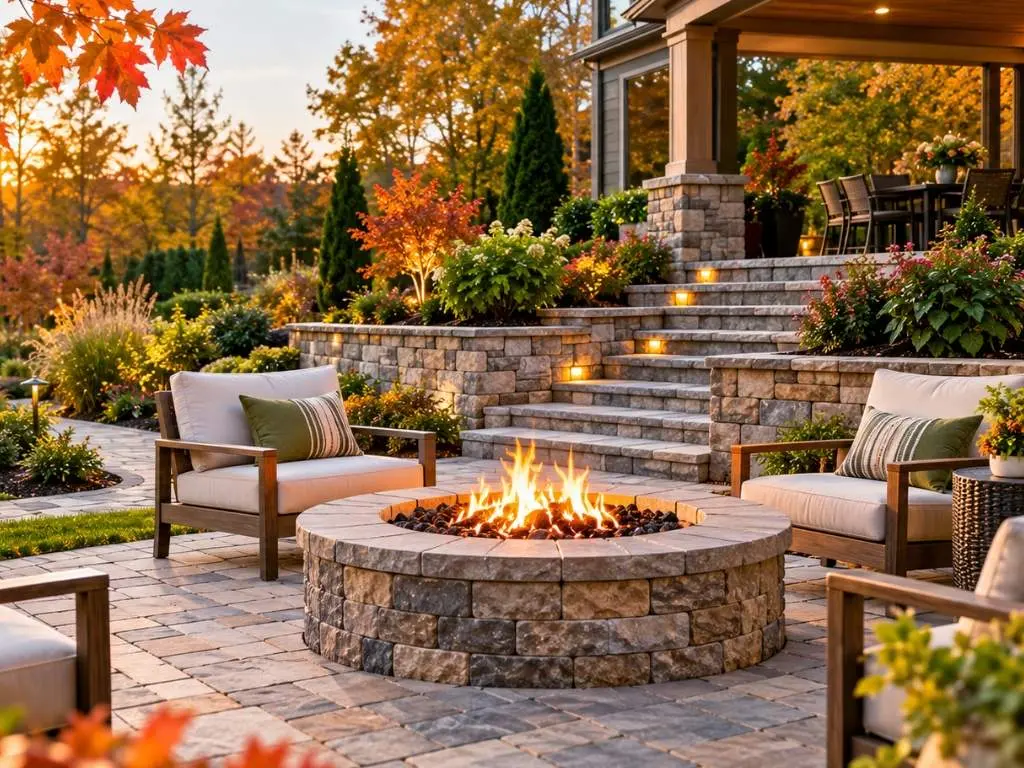
Fall may signal the end of the growing season, but it can be the beginning of a well-planned outdoor improvement. For Atlanta homeowners considering a new patio, walkway, retaining wall, or gathering space, this season offers valuable time to evaluate the yard and make thoughtful decisions before construction begins.
Starting a hardscaping project with a clear plan can help homeowners address important details such as drainage, grading, materials, and layout. By using fall to work through these considerations, you can enter the next phase of your project with a design that fits both your property and the way you want to use it.
Why Is Fall a Good Time to Plan Hardscaping in Atlanta?
After the heat of summer, fall provides an opportunity to spend more time outside examining how a property functions. Homeowners can walk through the yard and identify areas that are difficult to use, slopes that complicate mowing, drainage concerns, or spaces that could become more functional with a patio or walkway.
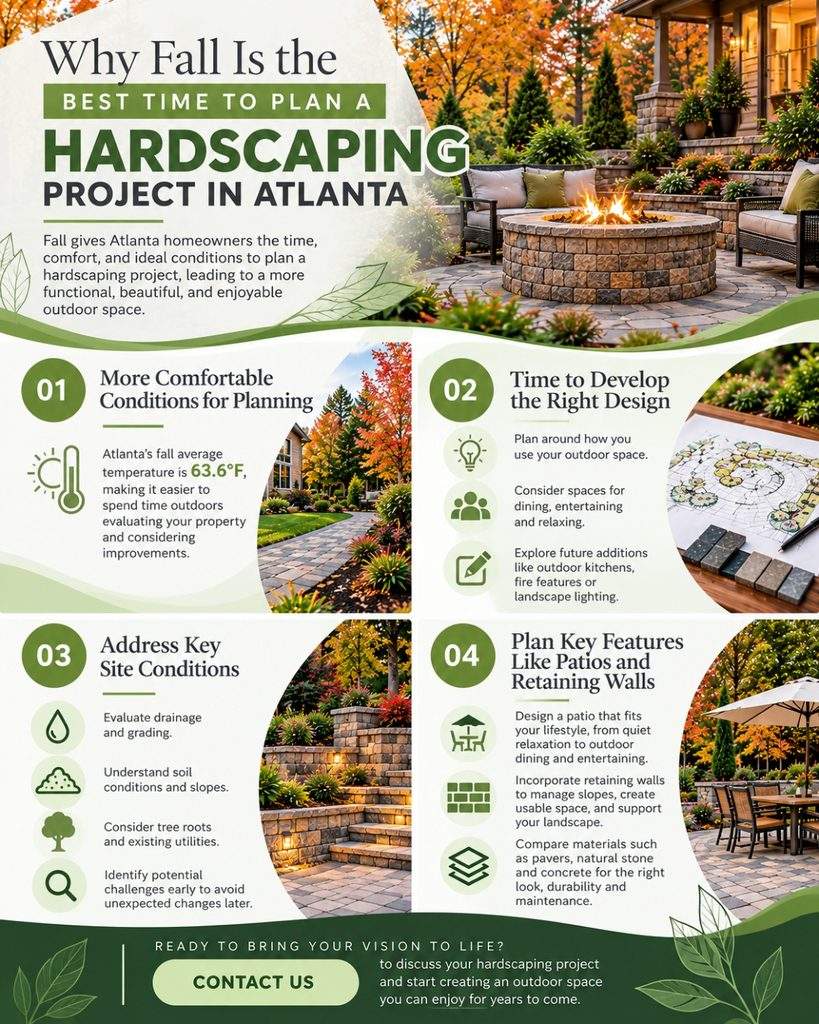
Atlanta’s fall climate can make this evaluation more comfortable. According to the National Weather Service, Atlanta’s normal average temperature for the fall season is 63.6°F. These milder conditions can give homeowners an opportunity to spend time outdoors assessing their property and considering improvements before colder weather arrives.
Good hardscaping in Atlanta, GA starts with understanding the property before choosing materials or finalizing a design.
Fall Gives You Time to Develop the Right Design
A hardscape should complement how people actually use their outdoor space. Before deciding on paver colors or stone patterns, consider how family members and guests will move through the yard.
Where should people enter the patio? Is there enough space around an outdoor dining table? Should a walkway connect the driveway to the backyard? Could a future fire feature, outdoor kitchen, or landscape lighting be incorporated into the design?
Starting the planning process in fall provides time to answer these questions and revise the layout without rushing. It can also help ensure today’s project works with improvements you may want to add later.
Evaluate Site Conditions Before Construction
What lies underneath a finished hardscape matters just as much as what appears on the surface. Soil conditions, slopes, drainage, tree roots, existing utilities, and equipment access can all influence a project’s design and installation.
Identifying these factors early may reduce the likelihood of unexpected changes once work begins. For example, an area that initially appears perfect for a patio may require additional grading or drainage improvements.
A professional site assessment can help determine how the existing landscape may affect the proposed hardscaping project.
Plan a Patio Around How You Will Use It
For homeowners considering patio installation in Atlanta, one of the first questions should be: What will this space be used for?
A small relaxation area has different requirements than a patio designed for dining, grilling, and entertaining. Furniture dimensions, walking paths, door locations, steps, and transitions into the lawn should all be considered before determining the final dimensions.
Planning these details in advance can help create a patio that feels comfortable rather than crowded. It also provides an opportunity to coordinate the patio with other outdoor features so the entire yard feels connected.
Consider Retaining Walls Early
A retaining wall can do much more than define a planting bed. Depending on the property, it may help manage elevation changes, create more usable space, support landscaping, or organize different outdoor zones.
When planning a retaining wall project in Atlanta, GA, homeowners should consider drainage, soil pressure, wall height, and surrounding grades. Some walls may also involve permitting or engineering requirements.
Because retaining walls can affect other areas of a landscape, they should be incorporated into the overall design early instead of being treated as an afterthought.
Compare Hardscape Materials Before Making a Decision
Concrete pavers, natural stone, brick, concrete, and wall block each offer different characteristics. Appearance matters, but it should not be the only consideration.
Think about maintenance, durability, texture, surrounding architecture, and how the material will function in the intended space. A surface used for outdoor dining, for instance, may have different priorities than a garden path.
Fall planning gives homeowners time to compare options and discuss availability before committing to a material.
Plan Drainage Alongside Your Hardscape
Adding patios, walkways, and walls can change how water moves through a yard. That makes drainage an important part of hardscaping design.
Before construction, determine where runoff will travel and whether existing grading needs to be adjusted. Depending on the property, solutions might include appropriate surface slopes, permeable pavers, drainage systems, or other methods of directing water away from problem areas.
The University of Georgia Cooperative Extension notes that permeable pavers can help reduce impervious surfaces by allowing water to infiltrate rather than simply running off. This makes drainage and material selection important considerations when planning patios and other hardscape surfaces.
Addressing drainage during the design phase is generally more practical than trying to correct water problems after a new surface has already been installed.
Start Planning Your Atlanta Hardscape This Fall
Successful hardscaping begins long before the first paver or stone is installed. Fall gives Atlanta homeowners time to evaluate their property, address drainage and grading, compare materials, and create an outdoor space that complements the way they live.
Ready to start planning your hardscaping project this fall? Contact Urban Nature Landscape to discuss your property, design goals, materials, drainage, and site preparation with an experienced team.